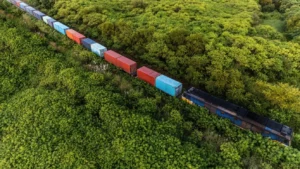
The global trade and logistics landscape is always under immense pressure to become faster, more efficient, and environmentally friendly. However, at the core of this transformation are the rail infrastructure investments that are reshaping global logistics and creating powerful synergies with trucking operations. In this blog, we are going to explore how rail infrastructure investments are transforming global logistics, with a special focus on intermodal collaborations between rail and trucking operations. This is now more important than ever as companies are under immense pressure from rising customer demands, environmental concerns, and increased competitive challenges.

The Strategic Shift: Why Rail Investment Matters in Logistics
Railway transport has long been at the core of freight transport for bulk goods, and now with global investments, there are new opportunities for rail transport to become a key player in global logistics.
Rail: An Efficient and Sustainable Freight Engine
- Fuel efficiency: Rail transport moves one tonne of freight nearly 500 miles on a gallon of fuel, which is three to four times more efficient than trucking.
- Reduced emissions: Rail freight transport generates up to 75% lower greenhouse gas emissions compared to road freight transport.
- Economic impact: for every $1 invested in rail transport, there are $2.50 in economic activity.
Market Growth and Future Projections
The global rail freight industry is expected to grow in the coming years. Projected revenues are expected to exceed $600 billion by the end of 2035. The intermodal freight sector is growing rapidly because of the flexibility of the intermodal system.
Intermodal Momentum: Why Rail and Truck Partnerships Are on the Rise
What Is Intermodal Transportation?
Intermodal freight is a type of transportation that uses more than one type of transportation. The most common intermodal freight is rail-truck combinations. The hybrid approach to freight transportation enables each type of transportation to take advantage of the unique benefits of each type of freight.
- Rail: The rail freight industry can handle large volumes of freight and is best used for long-distance hauls.
- Trucks: The truck industry is best used for short-distance hauls because of the flexibility of trucks.
Cost and Efficiency Advantages
By utilizing the benefits of rail and trucks, freight companies can save money and enhance efficiency.
- Cost Savings: The intermodal approach to freight transportation can save companies between 10% and 30% of freight costs compared to the use of trucks alone.
- Fuel Savings: The hybrid approach to freight transportation saves fuel because rail freight consumes less fuel per tonne of freight transported.
- Reliability: The intermodal approach to freight transportation is more reliable because of the logistics of the system. The use of intermodal freight has grown significantly because of the benefits of the hybrid approach to freight transportation. Intermodal freight now accounts for more than 25% of global rail freight traffic.
Enhancing Supply Chain Resilience
Intermodal freight is more resilient to supply chain disruptions because of the hybrid approach to freight transportation. The hybrid approach to freight transportation offers more options to supply chain companies.
- Flexible route options can help to reduce delays
- Rail corridors provide a secure and reliable alternative when road networks are congested
- This reliability is especially important to the e-commerce and retail logistics sectors, which require consistency and transparency throughout their extensive networks.
The Role of Infrastructure Investment in the Success of Intermodal Transport
Modernization of Rail Networks
There is considerable infrastructure investment planned and underway around the world, including:
- Over 100,000 km of rail track upgrades are planned to improve capacity and speed, 2023-2028.
- Intermodal freight traffic worldwide is increasing by 28% from 2022 to 2024, reflecting increased use of rail-supported logistics.
This is addressing historical issues such as out-of-date tracks and signalling, allowing for increased speed and reliability.
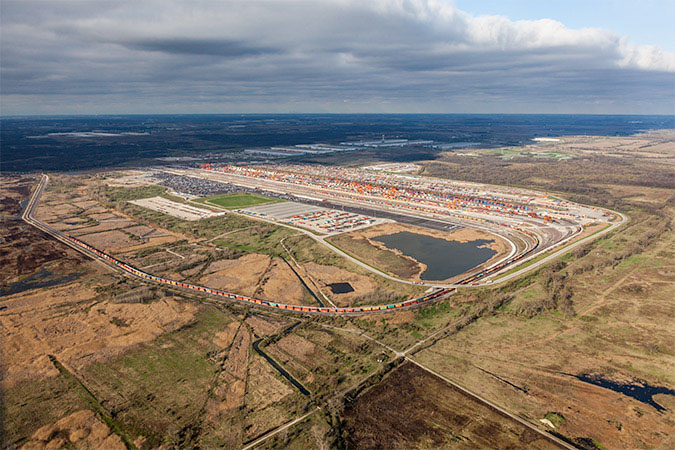
Expanding Capacity: An Increase in Intermodal Terminals
There is considerable infrastructure investment planned and underway around the world, including:
- More than 2,500 inland container depots (ICDs) worldwide, with hundreds built in recent years.
- Governments are offering subsidies to build new intermodal transport infrastructure.
Intermodal terminals are important to logistics operations.
Regional Highlights: How Investment in Rail Networks Benefits the World
Asia-Pacific: Dedicated Freight Corridors
For example, in India, new dedicated freight corridors have increased capacity, quadrupled daily train movements, and cut logistics costs and emissions.
Africa: Upgrading Rail to Improve Reliability of Export Logistics
Transnet, South Africa, is investing $7.3 billion in rail and port modernization to improve the reliability of key export products such as coal and iron ore.
Australia: Integration Projects
DP World, for instance, is investing $400 million in Port Botany, which will result in a doubling of rail container capacity, reducing dependence on trucks.
These developments are a reflection of a new global reality, where rail infrastructure is becoming recognized as a necessary component of a competitive logistics landscape.
Technological Drivers Enhancing Rail and Intermodal Logistics
Digital Tracking and Automation
The adoption of real-time tracking technology for rail logistics has exceeded 30% among mid-sized companies.
Standardized Containerization
The use of standardized containers has enabled smoother transitions between ships, trains, and trucks, making transportation cheaper.
Predictive Maintenance & IoT
The use of IoT technology by rail logistics providers has improved predictive maintenance, making rail transportation more efficient.
These technological developments not only make rail transportation cheaper, but they are also easily integrated with truck transportation, making intermodal transportation more efficient.
Key Benefits of Rail–Truck Partnerships
The benefits of intermodal rail and truck partnerships, which many logistics players are adopting today, are many:
- Reduced freight costs
- Fuel efficiency
- Reliability
- Scalability
- Reduced highway maintenance
Moreover, investing in rail infrastructure benefits regional and local communities by providing jobs and making them more competitive.
Conclusion: Actionable Takeaways
Investing in rail infrastructure is not just a transportation upgrade; it is a strategic upgrade to meet new global transportation realities. The new reality of intermodal rail and truck partnerships offers many benefits.